|
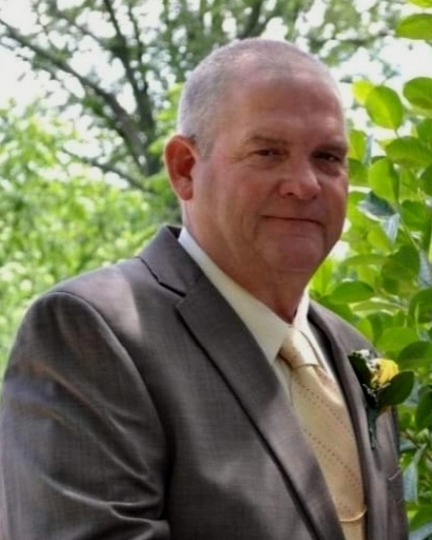
The Manuel Oyer Family and my dad
|
I continue this week with my childhood reminiscences by sharing my memories of Manuel Oyer (Uncle Man), his wife Lizzie Beacher
Oyer, and Lizzie’s
brother, Peter Beacher.
I will continue with the
daughters and Uncle Man’s sister, Elsie L. Oyer next week.
Uncle Man and Aunt Lizzie owned the farm we all
lived on which was about six miles north of Fisher, Illinois. He had one
hundred acres, which was considered minor compared to the other homesteads in
that area. For him and his family, it was enough. But as the economy changed
and the cost of running a farm increased while the profits decreased, other
sources of income became necessary. When the three girls were old enough, they
found work outside the farm. Their first job was working at the canning factory
in Gibson City, IL. This was during WWII, and the canning factory had
contracted with the Federal Government to produce canned goods to ship
overseas. Once that contract ended, the girls went to work at another factory, where they stayed until they were old enough to retire.
PETE
Uncle Man and Aunt Lizzie continued to take care
of the farming chores, assisted by Pete. He worked hard on the farm, always busy with some chore. He was quiet and kept to himself most of the time,
Although he was never officially
diagnosed, Pete was believed to be schizophrenic. He kept to himself most of
the time, didn’t care for us kids hanging about, and hated cats.
He used to drown the kittens in the river soon after they were born until my
mother and Lizzie got after him when a couple of us kids caught him in the act.
After that, he trained the dogs to do the job for him.
I don’t remember much else about Pete. He died
when I was young. I believe he had a heart attack; they found him face down in
a snowbank in the backyard. I didn't go to his funeral. Mom didn't take us because we were so young.
UNCLE MAN
 |
Uncle Man with Bev (left), me (center) and Donald (right)
|
Manuel Oyer was born on 18 March 1888 in
Fisher, Illinois. He was the brother of my great-grandmother, Anna Oyer. My father came to live with the Oyer family when
he was four years old. Uncle Man would have been around the age of 46 then and
was willing to take on a new ward. He taught my father all about farming. Dad
learned how to plow, plant, and harvest the corn and soybeans we grew there. He
also learned about raising and caring for farm animals. Uncle Man was grateful
when Dad could take over the farming. When he and Mom got married, he made a
contract with Uncle to take care of the farm and keep a portion of the profits
as payment.
Uncle Man cared for all of us. He would do
whatever he could for us. I remember once, soon after I started the third
grade, a binder Mom had bought for me came apart. Uncle Man said he would fix
it, but try as he might, he could not get the rings to close properly. The next
day when I got off the bus in front of our house, he called me over and handed
me a brand new binder. It was a nice one. He didn’t have to do that. He didn’t
break the old one, I did. But he felt bad that he could not get the other one
to work and wanted to make sure I had what I needed for school.
He was always doing little things like that for
us. He built a marble roller for us to play with, and taught us about caring
for small animals and how to differentiate the “good” snakes from the dangerous
ones.
I spent a lot of time at Uncle's house. He taught me a lot when we were together. He helped with my math and helped study for science tests. He taught me how to tie my shoes, hunt for fishing worms, and eat butter crackers with cranberry juice. He and I
would often sit in his big recliner and read his Bible. As he read, he would
explain the stories and lessons to me. He was one of the few people I knew that
understood Psalms, Proverbs, and even Isaiah and could put them into words that
a child could understand.
As Uncle grew older and his eyesight began to
fail, I would sit and read the verses to him. He would still have me stop so we
could discuss what we had read. We grew close during that time
together. It broke my heart when Mom told us he had passed away.
I remember the day we were all sent to Paxton to
Aunt Eula’s house. I knew it had something to do with Uncle Man. They said he
had had a heart attack. But I was still young and naïve and didn’t understand
the consequences. I was to learn them that evening when my mother came to take
us home, and she told us one by one what had happened. I was the third in line
behind my older sister and brother, but by the time it was my turn, I had
already figured it out from their reactions. Uncle Man had passed away. There
would be no more eating butter crackers soaked in cranberry juice, no more playing
checkers, no more reading the scriptures together. I cried until I thought my
heart would burst.
At the funeral, my father was noticeably quiet,
but I could see the pain on his face, and I knew he was feeling the same as I.
I hugged him around the waist and cried. He just rocked me gently back and forth
and patted my back. No words were exchanged, but I knew he understood.
AUNT LIZZIE
 |
Manuel and Lizzie Oyer, 50th anniversary
|
On 2 October 1913, Manuel Oyer married Elizabeth
Beacher. They had three children, all girls who never married.
Lizzie was born on 17 November 1891 in Foosland,
Illinois. In fact, she was born in the house that she lived in her entire life,
where she married Manuel and raised her three daughters.
Aunt Lizzie was a small but strong woman – strong
in stature and strong in will. She played a big part in keeping the farm
running when things got bad. She raised chickens that provided both eggs and meat
for the table. She grew a garden that had to be close to half an acre, and in
this garden, she grew sweet corn, green beans, beets, okra, peas, onions,
watermelons, lettuce – both head and loose-leaf, and green peppers. There may
have been more vegetables planted, but there were so many and a few of them
varied from year to year, so it’s hard to remember them all. What I remember was how good it tasted eating fresh vegetables right out the garden.
Every Spring we helped with the planting, and
every fall we got to help pick and can the fruits of our labors. We also helped
butcher the chickens when that time came around. Aunt Lizzie and her daughters,
and later Mom, would kill the chickens by holding a broomstick across the
chicken’s neck and standing on it to keep it from moving when they yanked the
chicken up by its feet, ripping the head off, and then dropping the chicken in
the yard as its nerves took over. For a few minutes, the chicken’s body would
flop around the yard, hopping to and fro and leaving a trail of blood behind
it.
 |
The Oyer Home
|
Once the body lay still in the yard, we would run
and grab it before the next chicken was beheaded. Aunt Lizzie taught us how to
dip the chicken, holding it by the legs, into a container of hot water just
long enough to moisten the feathers and loosen them without cooking the skin.
She showed us how to pull the feathers off the chicken and clean any nubs that
were left behind. Once this process was done, the singeing of any hairs was
done over a hot stove and then the butchering began. I watched that part closely; I
wanted to understand and learn the process so I could do it myself when I grew
older. It’s not as much fun as it looks.
Aunt Lizzie had quite a sense of humor. Some
people found her a little droll, but I thought she was funny. She would say
things like “You can’t hold what you can’t get your hands on” when somebody
passed gas. She would pat someone’s knee and say, “You know, the Indians don’t
have this kneecap,” to which the person she was patting would say, “Why not,”
or “Are you sure?” to which she would answer, “No, it’s your kneecap.” Another
joke she always told was, “Did you know they aren’t making toothpicks any
longer?” to which someone would ask, “Why not?”
“Because they are long enough,” she would
answer with a giggle. Some people got her jokes and chuckled; some just looked
confused. I must have heard those jokes a hundred times; she told them to
everyone who came to visit.
 |
Aunt Lizzie with my older sister
|
I remember the boxes Aunt Lizzie used to put
together when a family member or friend was sick. Each box had several small
squares in which she would put her goodies; a different type of candy was
placed in each square with a note that explained what it represented. There
would be “orange slices” for Vitamin C; hard-boiled eggs (hard-coated Easter
Egg candy); M&M cold pills; hard mint aspirin tablets; a marshmallow angel
food cake; and many other fun little gifts in the box. A get-well card was sent
along with the “food” box. She would always take one of us along to deliver the gift. People really appreciated it and the sentiment that came with it.
I wasn’t home when Aunt Lizzie died. I was in
Montana. I was not able to attend the funeral, and I am sorry
for that. I never got to say a proper goodbye to her. She had lived a long life
and was good to everyone she met. An industrious woman and a faithful soul, she
never complained about her life. She was always concerned about others, sending
comfort when it was needed.
This family raised my father and helped raise me and my siblings. They
cared for us as if we were their grandchildren instead of distant relatives.
They taught us a great deal about life and being self-sufficient. Life on the
farm with these loving people and our wonderful parents was the best start
in life a child could ever need.